SCBUs Survival Rate Soar on Healthcare Investment
The Special Care Baby Units (SCBUs) have achieved a national average survival rate of 90 percent for the first time, a landmark achievement in neonatal care, since they were initiated in 2017.
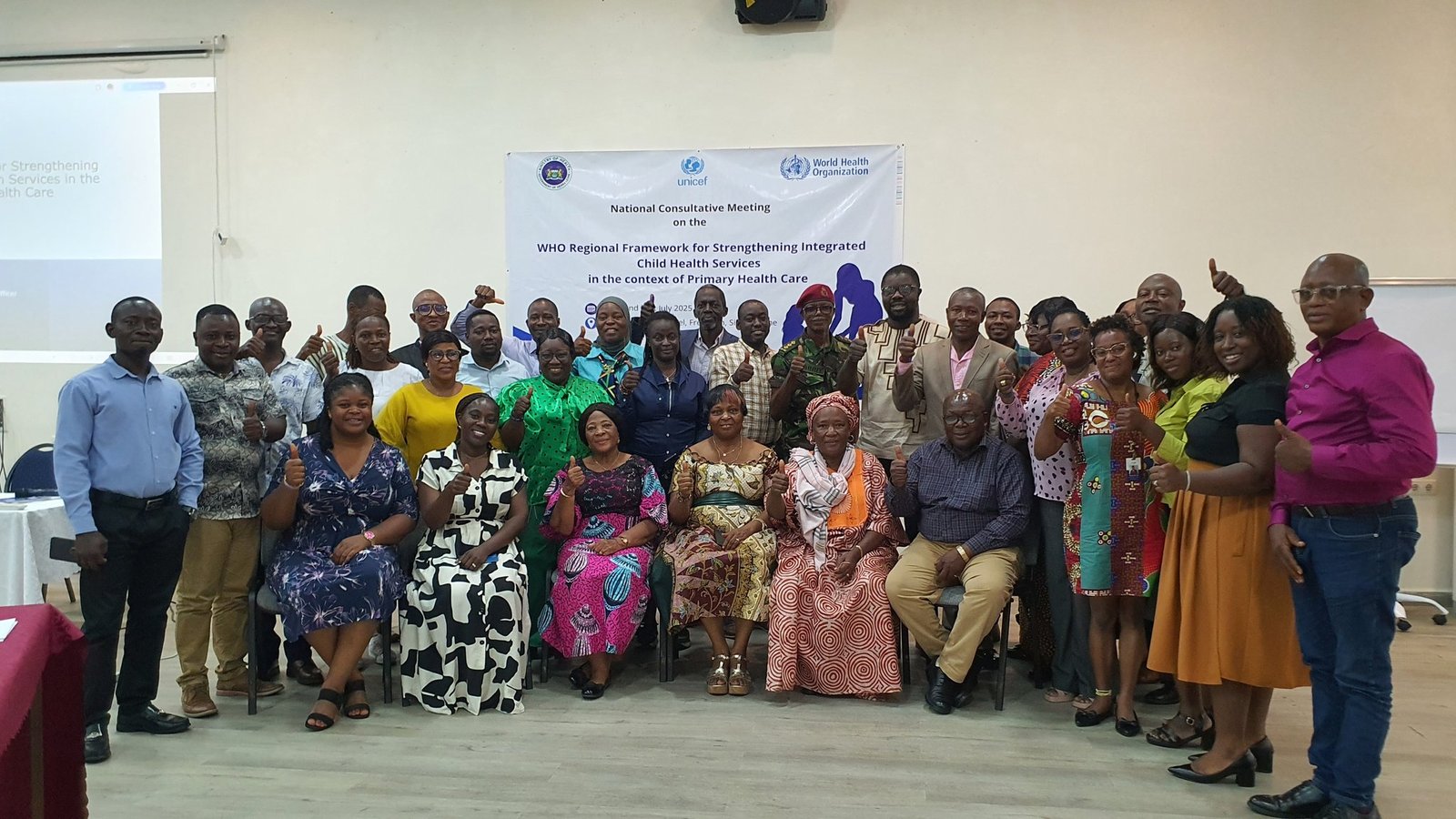
This was announced at a press conference in Freetown by the Minister of Health Dr. Austin Demby,
The milestone, unveiled after a six-month review in 2025, positions baby care as a rising pillar of social returns on health spending, with sustained investment in quality care and management systems, influencing future budget allocations and donor support.
The Ministry attributes this success to a holistic approach, encompassing improved infrastructure in the SCBUs, enhanced training for healthcare workers, and the implementation of innovative care practices.
A key component highlighted by Dr. Demby, is the increasing adoption of "Kangaroo Care," a method where newborns are held skin-to-skin, mimicking the environment of the womb and promoting better physiological development.
"When a baby comes out too early, they're yearning for that environment from which they came, taking this baby and putting on your body, allowing them to feel that they're still in the womb, allows them to thrive," explained Dr. Demby.
He emphasized the Ministry's ambitious goal of reaching a 100% survival rate across all SCBUs, urging officials to maintain momentum and strive for continuous improvement.
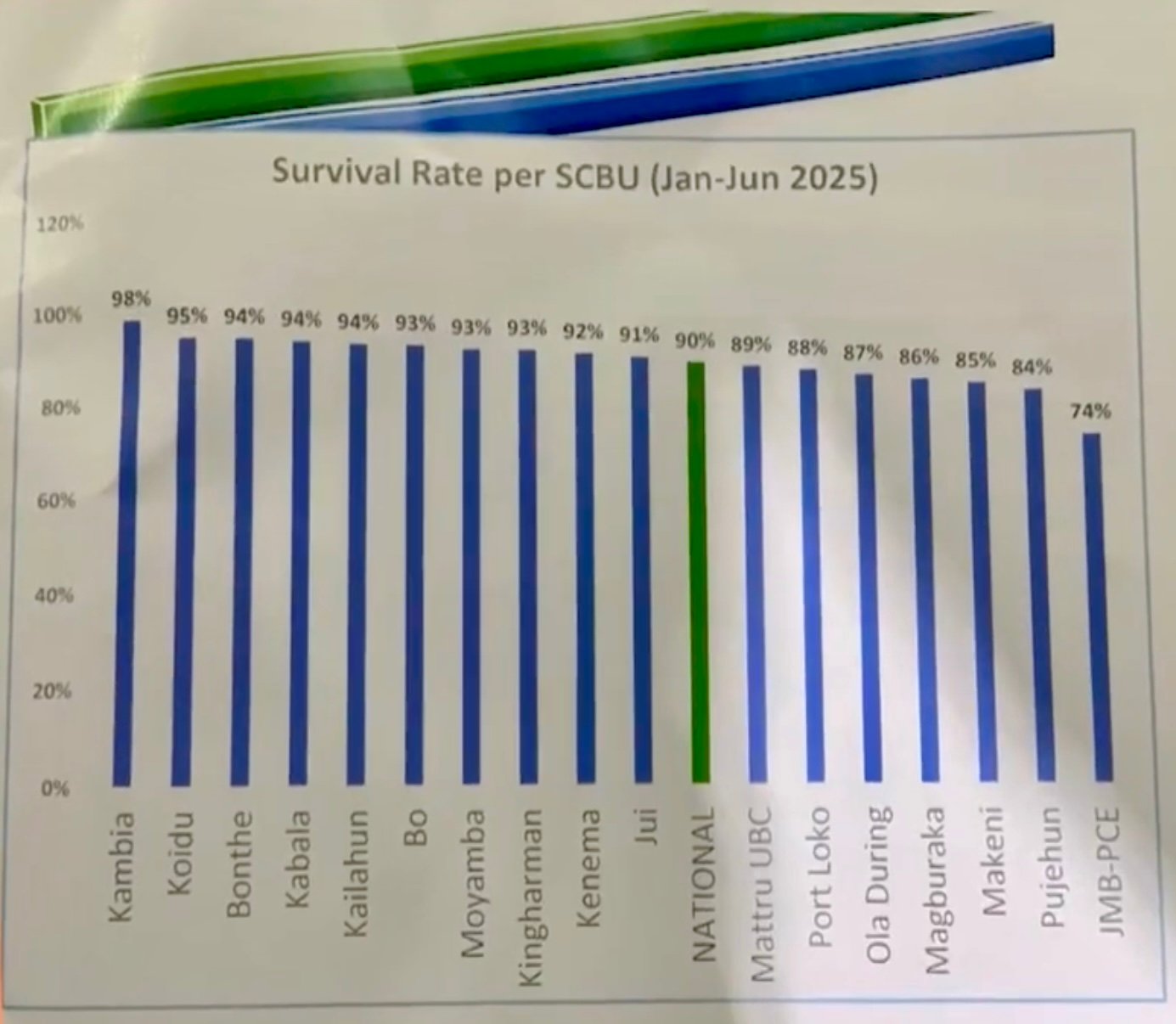
The SCBU performance from January to June 2025 reveals significant regional variations. Kambia leads the way with an impressive 98 percent survival rate, followed closely by Koidu at 95 percent, and Bonthe, Kabala, and Kailahun achieving 94 percent.
While most districts demonstrate strong performance in the low 90 percent range, several facilities lag behind. Mattru UBC (89 percent), Port Loko (88 percent), Ola During (87 percent), Magburaka (86 percent), Makeni (85 percent), Pujehun (84 percent) and JMB-PCE (74 percent) are below the national average, signalling potential areas for targeted investment and intervention.
The 90 percent survival rate milestone signifies a turning point for babies healthcare landscape in the country. It provides a strong foundation for further advancements and reinforces the importance of continued investment in this critical area.
The tangible impact of this progress will be felt for generations to come, as more babies are given the best possible start in life. With this momentum in place, the focus now shifts to maintaining the trajectory toward universal 100% survival in all facilities, and translating health gains into durable economic and social returns.