Health leaders unite in Maputo to combat child mortality crisis
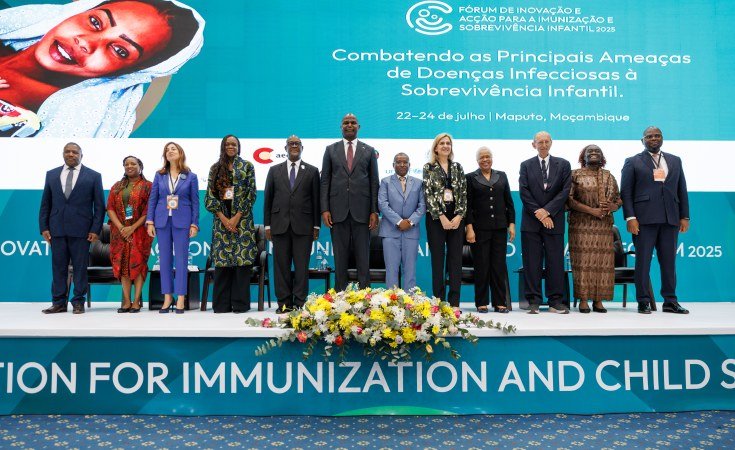
Global health leaders convened in Maputo for the Innovation and Action for Immunization and Child Survival Forum 2025, focusing on urgent strategies to expand life-saving immunization access and eliminate preventable child deaths across sub-Saharan Africa.
Hosted by the governments of Mozambique and Sierra Leone, alongside partners like the Gates Foundation and UNICEF, the forum comes at a critical point just five years shy of the Sustainable Development Goals (SDGs) 2030 deadline.
At the forum, Sierra Leone’s Minister of Health, Dr. Austin Demby, called for "a bold new continental movement" to redefine child survival strategies in Africa. “Our next steps must be evidence-informed, high-impact interventions, including new vaccines and better vaccine regimens, integrated care, domestic investment, and equity-driven solutions,” he stated, stressing the importance of shaping a prosperous future for all children.
Nearly 4.3 million children die every year from preventable diseases globally, with 58 percent of these deaths occurring in sub-Saharan Africa.
Despite significant achievements, Sierra Leone has seen under-five mortality rates drop by 53 percent since 2010, as urgent challenges persist. The under-five mortality rate remains alarmingly high, exacerbated by continued reliance on out-of-pocket spending for health care, which accounts for over 50 percent of total health expenditures.
The government has taken proactive measures, including the introduction of designated budget lines for new vaccines in FY2025. However, only 8% of the national budget is needed to overcome poor infrastructure, limited supplies, and acute health worker shortages.
The forum also addressed critical funding challenges, highlighting record cuts to global public health programs. In conflict-affected regions like Sierra Leone, where children are nearly three times more likely to die before age five, these funding gaps pose severe risks to child survival efforts.
Amid these barriers, the forum aims to foster a collaborative environment for stakeholders to share innovations and strategies. Notable discussions will include integrating various health services and leveraging data to enhance care delivery.
Dr. Yasmin Ali Haque of UNICEF emphasized, "By investing in strong, integrated primary health-care systems and reaching every child with life-saving care, we can save millions more young lives."
The dialogue will also focus on scaling up diagnostic tools and nutrition solutions, particularly for vulnerable children in conflict and climate-impacted settings. The need to mobilize domestic resources and explore innovative financing mechanisms emerged as crucial steps to creating sustainable financing for health interventions.
As leaders from across the continent gathered in Maputo, the forum serves to strengthen commitments towards eradicating preventable child deaths and ensuring every child has the chance to thrive. With renewed dedication and strategic investments, there is hope for a brighter future, a future where no child is left behind in the fight for survival and well-being.