National CPI holds at 6.45% YoY in July as MoM edges up to 0.32%
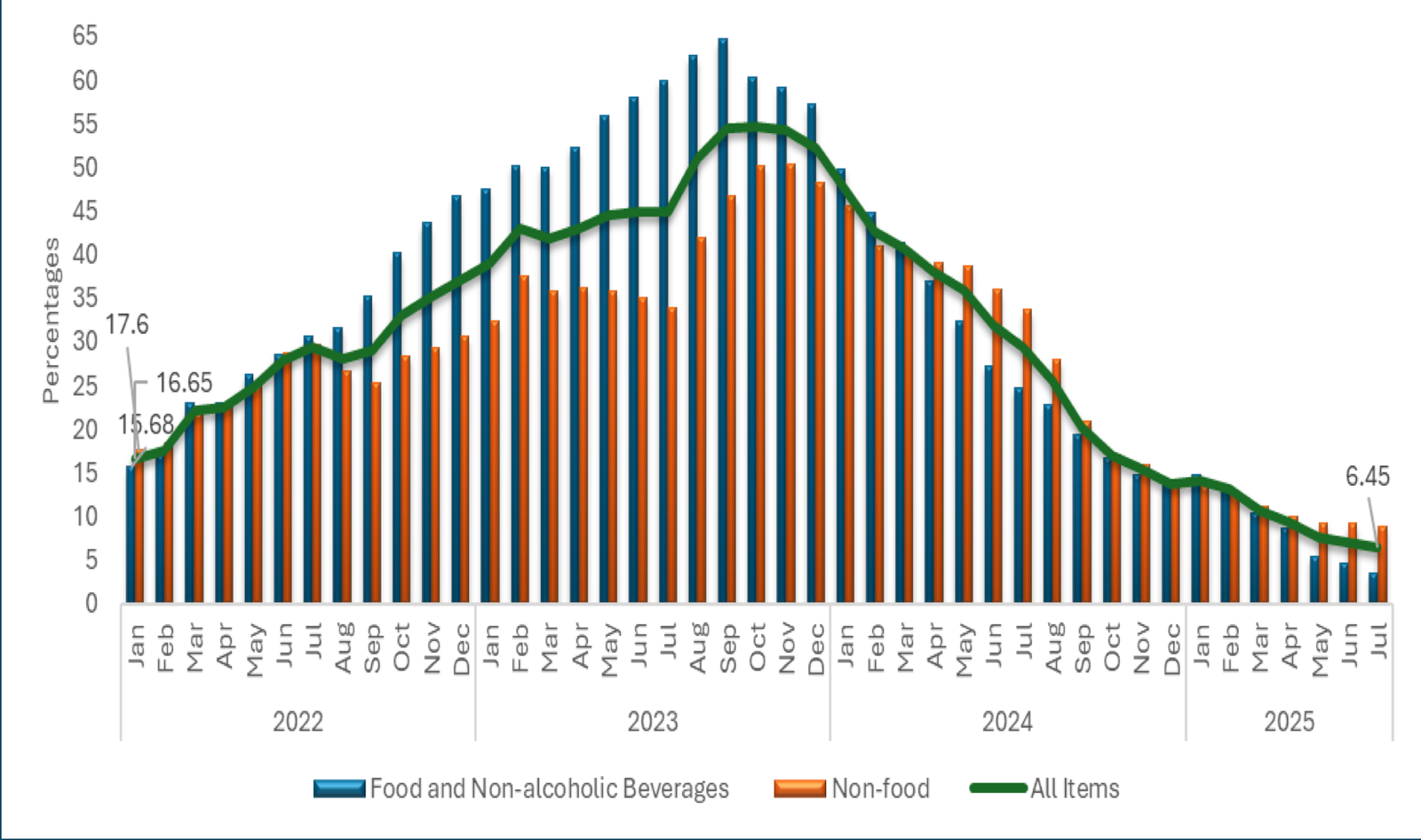
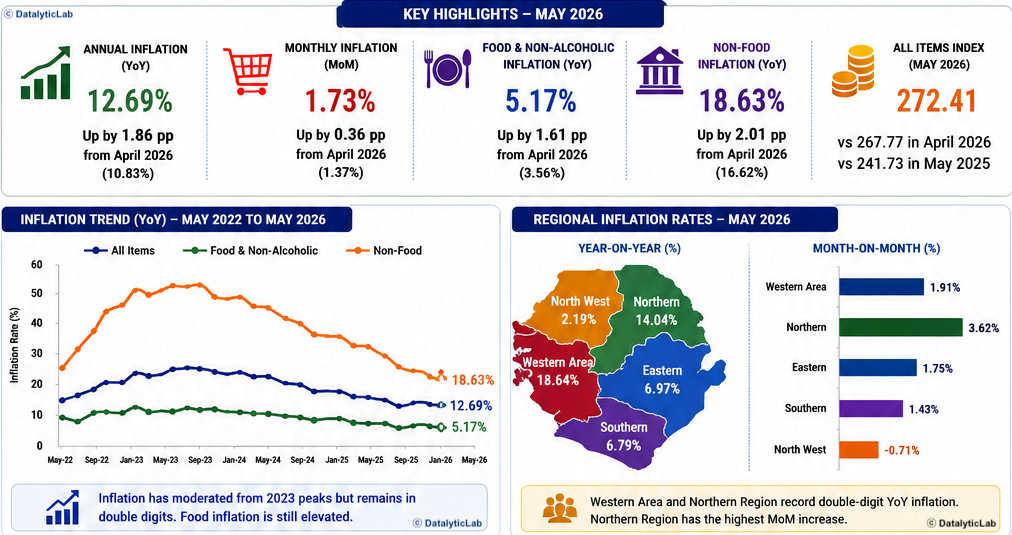
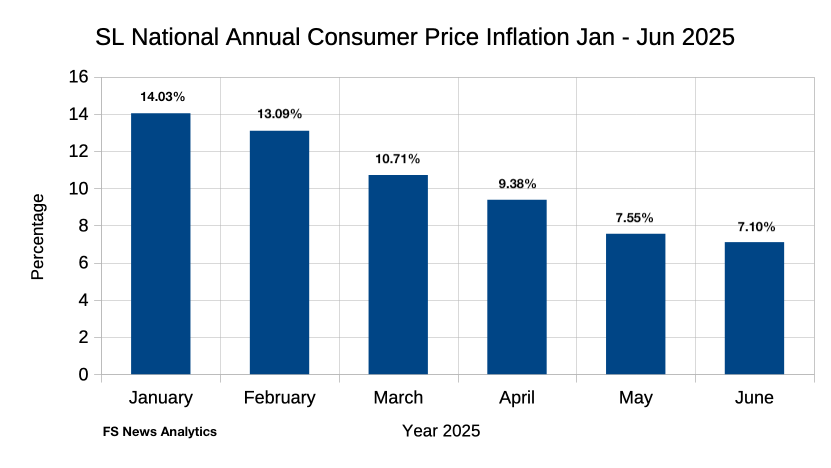
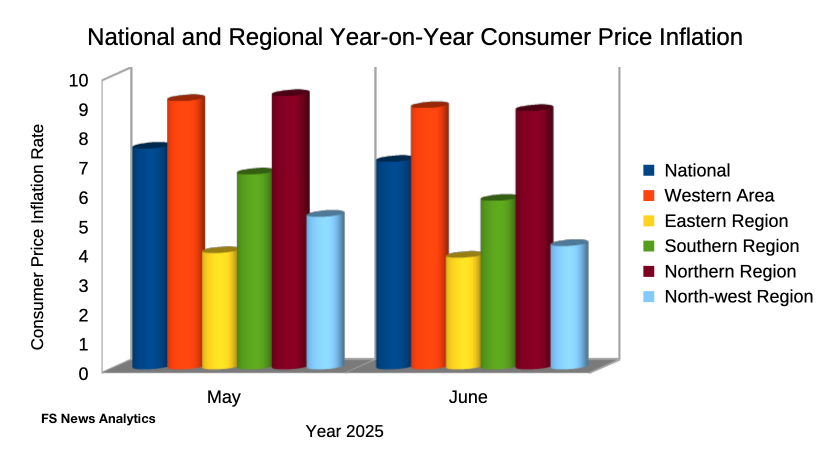
The latest Consumer Price Index (CPI) data released by Statistics Sierra Leone (StatsSL), reveals a year-on-year (YoY) inflation rate of 6.45 percent, a slight dip in July 2025, modestly slower than June’s 7.10 percent pace, offering a glimmer of respite amidst economic pressures.
The July 2025 reading followed a softening trajectory from a peak earlier in the year, with food inflation cooling but housing and several services contributing to broader price pressures. While still elevated, the marginal decrease suggests a potential deceleration in the rate of price increases, with month-on-month (MoM) inflation accelerated to 0.32 percent.
The CPI, a crucial barometer of economic health, moved from 241.09 in June 2025 to 241.85 in July 2025, resulting in a MoM inflation of 0.32 percent. This indicates that while prices continue to rise, the pace of increase has slowed compared to the previous month.
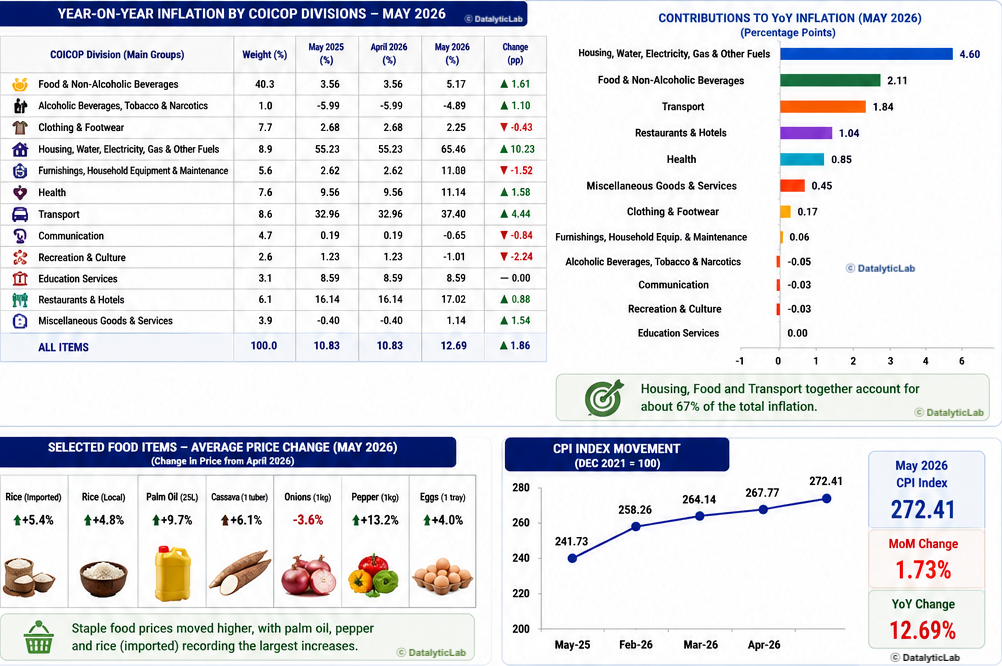
A closer examination of the 12 main COICOP (Classification of Individual Consumption According to Purpose) functions reveals a mixed bag of inflationary pressures. Notably, the education eervices category continues to exhibit the highest YoY inflation rate at a staggering 34.96 percent. This signifies a persistent and significant burden on households regarding educational expenses, despite the category registering zero MoM inflation. The high cost of education raises concerns about access and affordability, particularly for low-income families.
Other sectors experiencing notable inflationary pressures include restaurants and hotels 19 percent YoY, furnishings, household equipment and routine household maintenance 10.49 percent YoY, and recreation and culture 10.20 percent YoY). These figures highlight the impact of rising costs on discretionary spending and essential household goods.
Conversely, the transport sector experienced the lowest YoY inflation at 0.63 percent, suggesting relative stability in transportation costs. The communication sector also saw relatively low inflation at 2.98 percent YoY.
Looking at monthly changes, housing, water, electricity, gas and other fuels recorded the highest MoM inflation at 2.44 percent. "Recreation and Culture" followed, with 1.16 percent . While most other divisions experienced either minimal increases or decreases, several registered negative MoM inflation. Alcoholic beverages, tobacco and narcotics showed a decrease of 1.28 percent, health declined by 0.88 percent and furnishings, household equipment and routine household maintenance saw a dip of 0.80 percent.
It's important to note that food and non-alcoholic beverages which constitute over 40 percent of the weight, saw an inflation rate of 3.56 percent year-on-year (YoY), while non-food inflation cooled to 8.84 percent in July from 9.12 percent in June.
The slight cooling in overall inflation offers a sliver of hope, but the persistent high costs in crucial sectors like education and the volatility across various COICOP functions indicate that there is still room for improvement from the economic challenges. If housing costs stabilize and food price movements remain contained, inflation could ease further into late 2025. However, the outsized YoY pressures warrant close monitoring, as they can carry leverage into wage negotiations, retail pricing, and fiscal policy.