Regional inflation diverges as national pace slowed in July
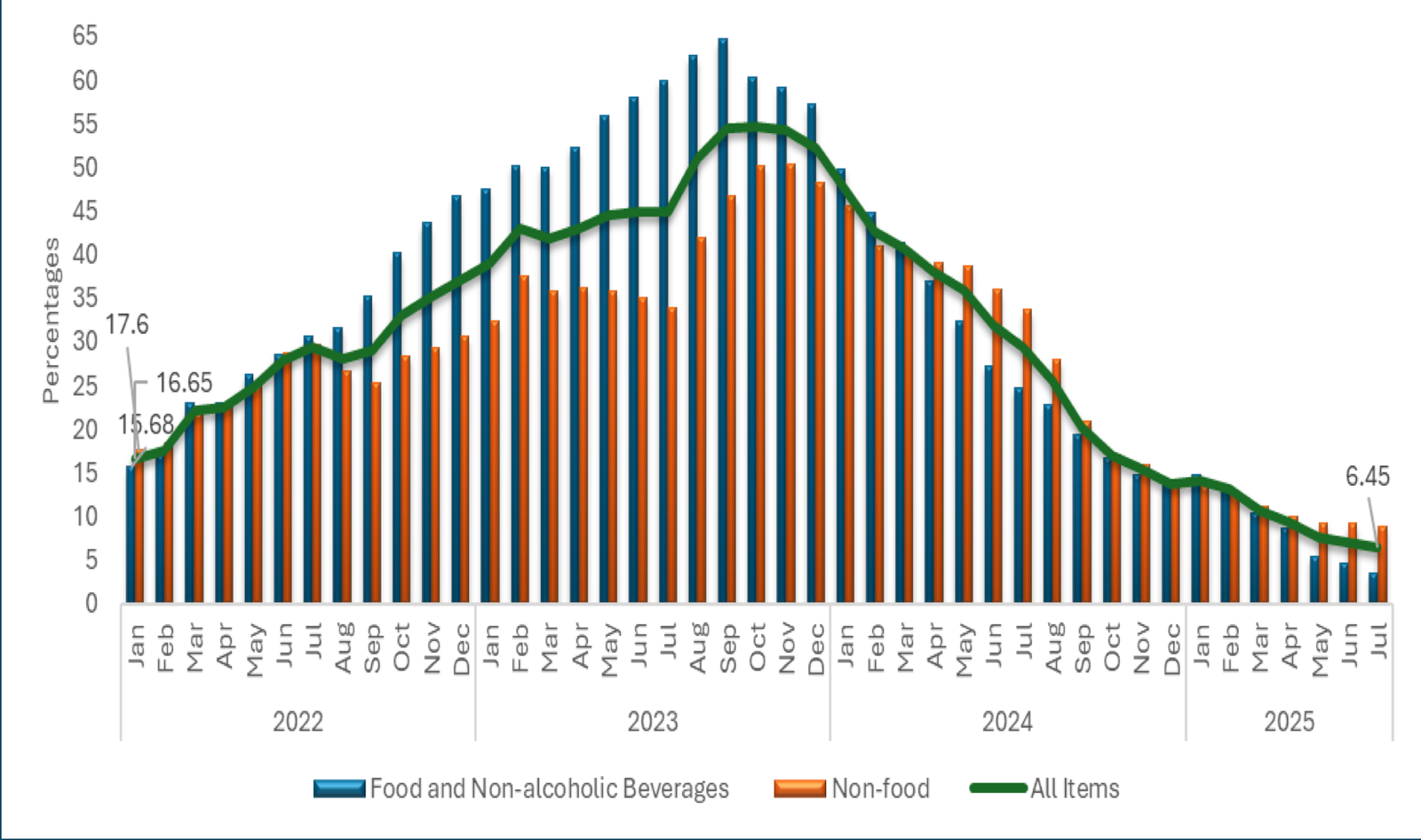
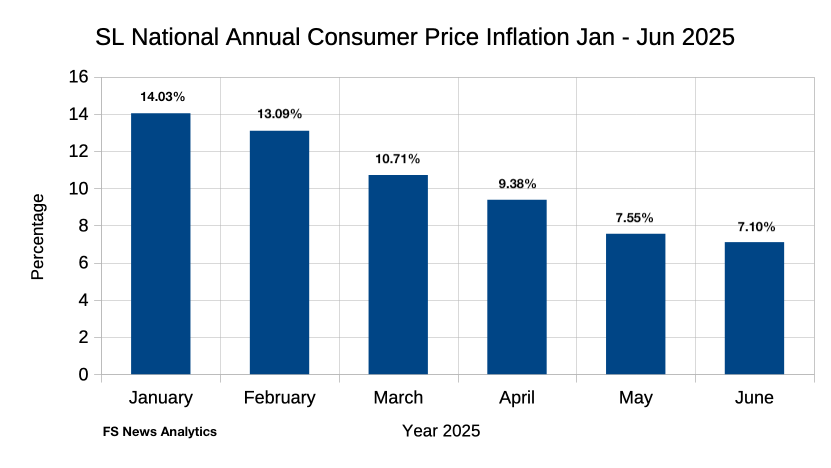
Sierra Leone’s July 2025 inflation picture shows a divided regional landscape even as the national rate softened to 6.45 percent year-on-year (YoY), with month-on-month (MoM) prices edging up 0.32 percent.
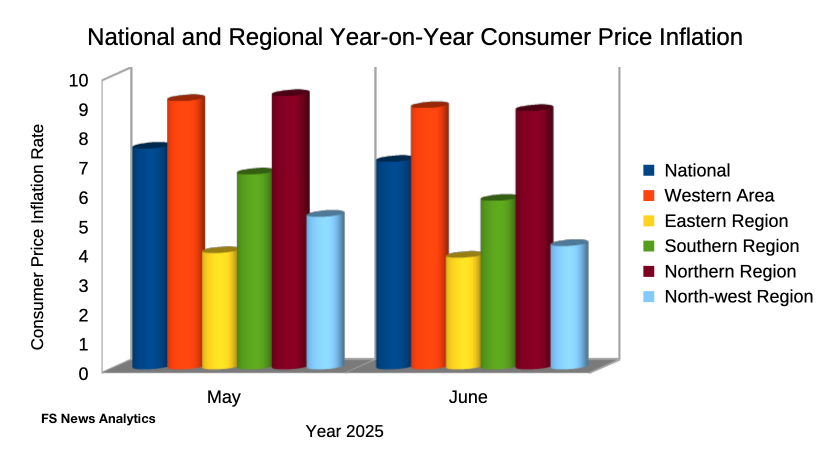
The latest data, dissected by region, uncover four regions posting lower YoY inflation than in June, while the Northern region bucked the trend with a notable uptick. All regions remain in single-digit territory, underscoring broad price stability but with pockets of pressure.
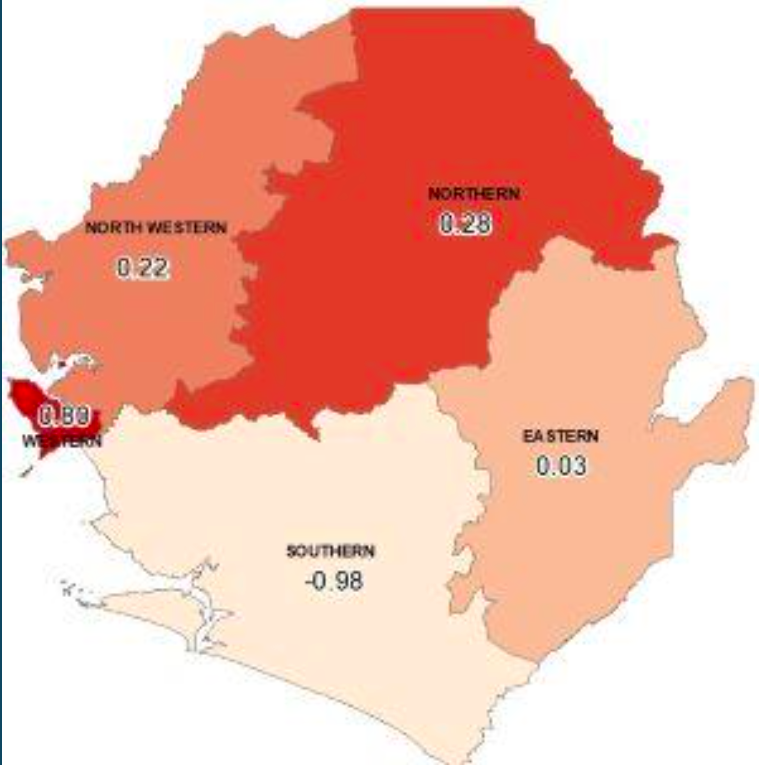
The Western Area, home to the capital Freetown, saw inflation fall from 8.94 percent in June to 8.21 percent in July. Continuing to run above the national average but retreating meaningfully from the prior month, as MoM inflation rose to 0.80 percent in July, highlighting renewed price pressures in the urban core.
The Eastern region also witnessed a decrease, from 3.82 percent to 3.44 percent, with a modest MoM acceleration to 0.03 percent, indicating relatively contained prices in the eastern belt. While the Southern region experienced a more significant drop, moving from 5.77 percent to 4.17 percent , with MoM inflation turned negative at -0.98 percent, suggesting a soft month for consumer prices in the south.
The North-west region saw the largest decline, with inflation easing from 4.22 percent to 2.77 percent, but MoM inflation rose to 0.22 percent, signalling some short-term price pressures even as the annual rate cools.
In contrast, the Northern region bucked the trend, experiencing an increase in inflation from 8.84 percent in June to a high of 9.98 percent in July, the region remains the only one above the national pace. This rise raises concerns about specific economic factors impacting the region, potentially driven by stronger price momentum in July, as MoM inflation surged to 0.28 percent.
The data also reveals regional disparities compared to the national average. Both the Western Area and the Northern regions are experiencing inflation rates above the national figure of 6.45%, suggesting residents in these areas are facing higher living costs than the national average, whilst the other regions are experiencing a relatively lighter burden on consumer prices.
With all five regions maintaining single-digit inflation rates, this a positive sign suggesting overall price stability is within reach. The regional divergences stress the need for targeted policy interventions to address the specific drivers of inflation in each area, understanding the underlying causes is crucial for implementing effective measures to ensure equitable economic growth, and stability across all regions.