World Bank signals bullish prospects for SMEs

The World Bank recently concluded its Implementation Support Mission (ISM) for the Sierra Leone Economic Diversification Project (SLEDP), an initiative aimed at strengthening the nation’s economic framework and the growth of Small and Medium Enterprises (SMEs).
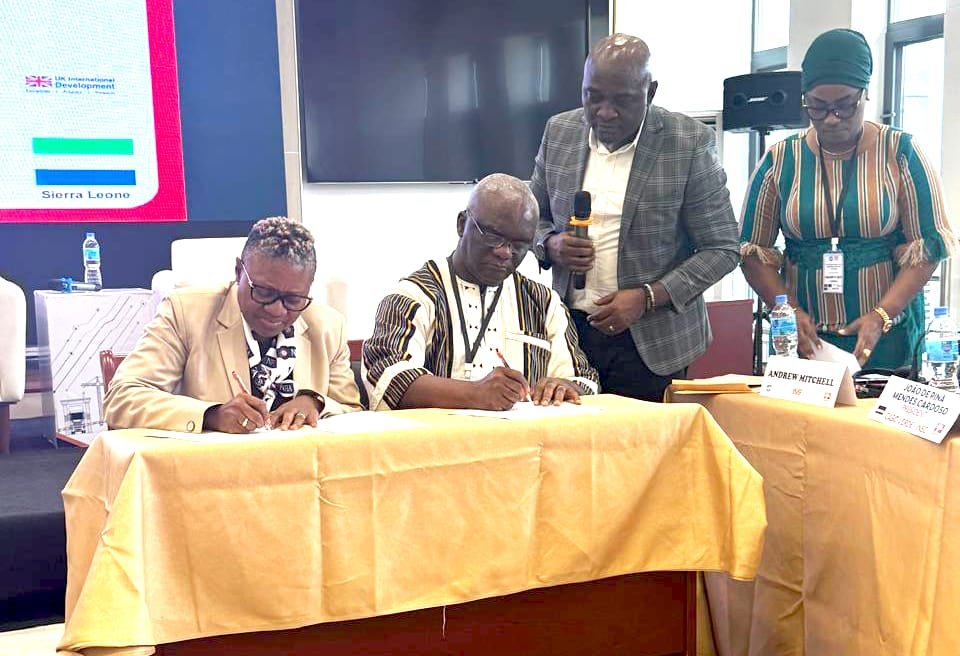
The review mission, led by Task Team Leader Alari Mahdi, convened with key government officials, including Acting Minister of Finance Kadiatu Allie, gauged progress made so as to be able to navigate any challenges that have surfaced as the project approaches its anticipated closure in October 2025.
In her address, the acting minister of finance acknowledged the World Bank’s critical support, highlighting its significant influence on various sectors within Sierra Leone.
SLEDP Project Coordinator Mary Jalloh elaborated on the mission’s core objectives, stressing the importance of holding thorough technical discussions with all implementing agencies, including project coordination units, contractors, and supervising consultants to assess the current status of the project comprehensively.
To ensure effective implementation, the team also conducted site visits to various ongoing project locations, identifying operational challenges and proposing actionable solutions to meet the SLEDP’s goals effectively.
Financial Secretary Mathew Dingie emphasized the urgency of completing all project activities before the looming deadline, marking it as a crucial phase for maintaining momentum.
Mahdi reported considerable advancements across the project’s various components, underlining its alignment with Sierra Leone’s developmental aspirations. The mission revealed that SLEDP has successfully dismantled substantial private sector barriers through multifaceted interventions at three critical levels.
At the economy-wide level, the initiative has rolled out extensive business reforms; sector-specific programs aimed at bolstering tourism have been launched; and firm-level strategies have been implemented to support SMEs, enhancing their operational scalability, productivity, and overall business environment.
Noteworthy results have emerged from these initiatives, including a dramatic reduction in the time required to obtain a construction permit from 182 days to a mere 14 days.
In addition, there have been significant improvements in the business registration process at the National Investment Board, leading to quicker business formation and demonstrating the project’s efficiency in cutting through bureaucratic red tape.
The SLEDP has generated over 14,000 direct and indirect jobs since its inception and has successfully leveraged more than $600 million in private capital through its collateral registry, according to the Ministry of finance, creating a more inviting investment climate.
Tourism, a vital cog in the country’s economic diversification wheel, has seen visitor numbers double, with enhancements to key tourism sites poised to further amplify visitor inflows and attract new investments.
With all project development objective indicators reportedly met, Mahdi confirmed that the initiative is on track to fulfill its remaining targets.
Nonetheless, she flagged critical issues surrounding the sustainability of its interventions, focusing on areas such as asset maintenance and waste management, while urging the Ministry of Finance to accelerate outstanding activities as the closure date approaches.
The acting minister encouraged the project team to maintain their proactive approach, prompting Mrs. Jalloh to facilitate effective communications with contractors to ensure the timely completion of all activities. She assured the World Bank team that all concerns raised would be collaboratively addressed with relevant stakeholders, reinforcing the government’s unwavering commitment to the project’s success.
As Jalloh echoed this commitment, praising the ongoing support from both the acting minister and the financial secretary, the partnership exemplified through this mission underscores the collaborative spirit necessary for fostering sustainable economic growth in Sierra Leone.
This vital session also included discussions Principal Deputy Financial Secretary Samuel E.B. Momoh, Chief Economist Alimamy Bangura, and Technical Adviser to the Minister Dr. Franklin Sisabu Bendu.
The delegation from the World Bank also included Country Manager Abdu Muwonge and Co-Task Team Leader Louise Twinning-Ward.