Security forces secure funds to break gender barriers in peacekeeping

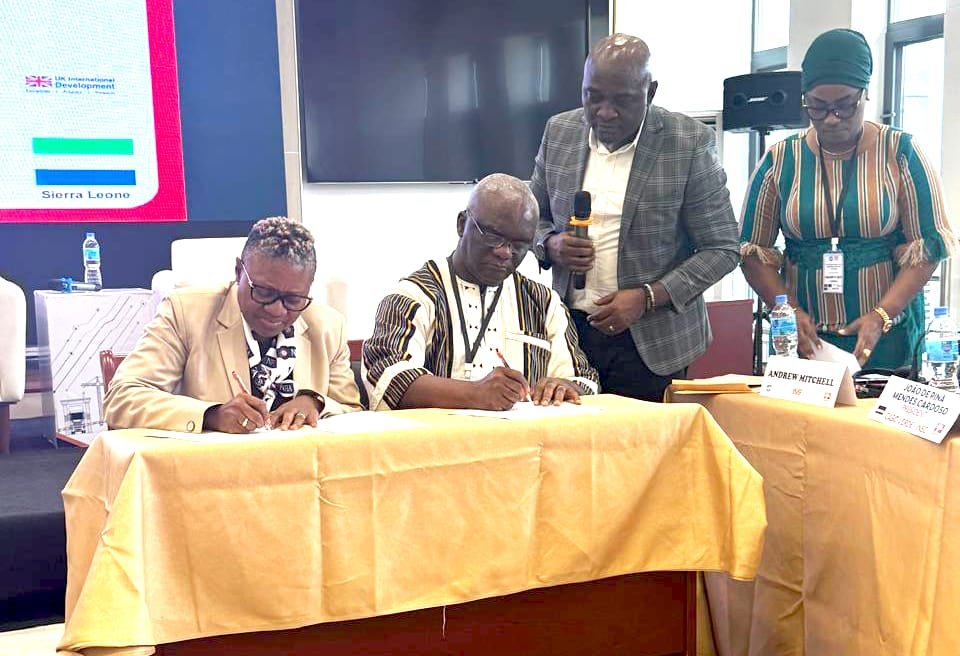
Sierra Leone’s peacekeeping narrative took a decisive turn this month the security ecosystem secured targeted funding from Elsie Initiative to break gender barriers in peacekeeping.
Anchored by the Elsie Initiative Fund with support from Ministry of Defence, Republic of Sierra Leone Armed Forces (MOD_RSLAF) and United Nations (UN) Women Sierra Leone, in partnership with the Ministry of Gender and Children’s Affairs (MOGCA), the funding aims to dismantle systemic obstacles hindering women's full participation and leadership in Sierra Leone’s security apparatus.
The launch, spearheaded by First Lady of Sierra Leone Fatima Bio, UN Resident Coordinator Seraphine Wakana, RSLAF leadership, and a spectrum of partners from government and civil society, signals a two-year program designed to lift women into leadership and frontline roles within the RSLAF and its peacekeeping operations.
The program envisions a more inclusive and effective force, with concrete commitments to enhanced training facilities, fairer policy frameworks, strengthened healthcare provisions for personnel, and a ramp-up of female medical deployment in peacekeeping contexts. At its core, the initiative also establishes robust mechanisms for reporting misconduct, ensuring accountability and a safer environment for all service members.
The project aligns with Sierra Leone’s Gender Equality and Women’s Empowerment Act, the UNSCR 1325 National Action Plan on women, peace and security, and the mid-term national development plan, all of which feed into the United Nations Sustainable Development Cooperation Framework (UNSDCF) for 2024–2030.
Officials emphasize that this initiative is not only about workforce diversification but also about generating ripples across policy, health, and governance systems, where women’s leadership translates into more resilient security outcomes.
By elevating women into leadership at all levels of RSLAF and in peacekeeping deployments, Sierra Leone positions itself as a regional trailblazer, potentially influencing neighbouring countries to pursue similar reforms and reinforcing the legitimacy of peace operations through gender-inclusive approaches.
Chief Superintendent Zainab Gbla’s recent accolade as UN Women Police Officer of the Year was highlighted as a case study in the program’s potential impact. Advocates argue that empowering women at the operational level translates into improved mission readiness, enhanced community trust, and more durable peace outcomes.
The two-year Elsie Initiative-funded project represents a meaningful capital allocation to strategic human capital in thesecurity sector. For development partners and international supporters, the program offers a cogent return, with stronger, more accountable peacekeeping capabilities reinforced by a more inclusive culture.