S/Leone’s epidemic sleuths move to frontline, strengthening health security
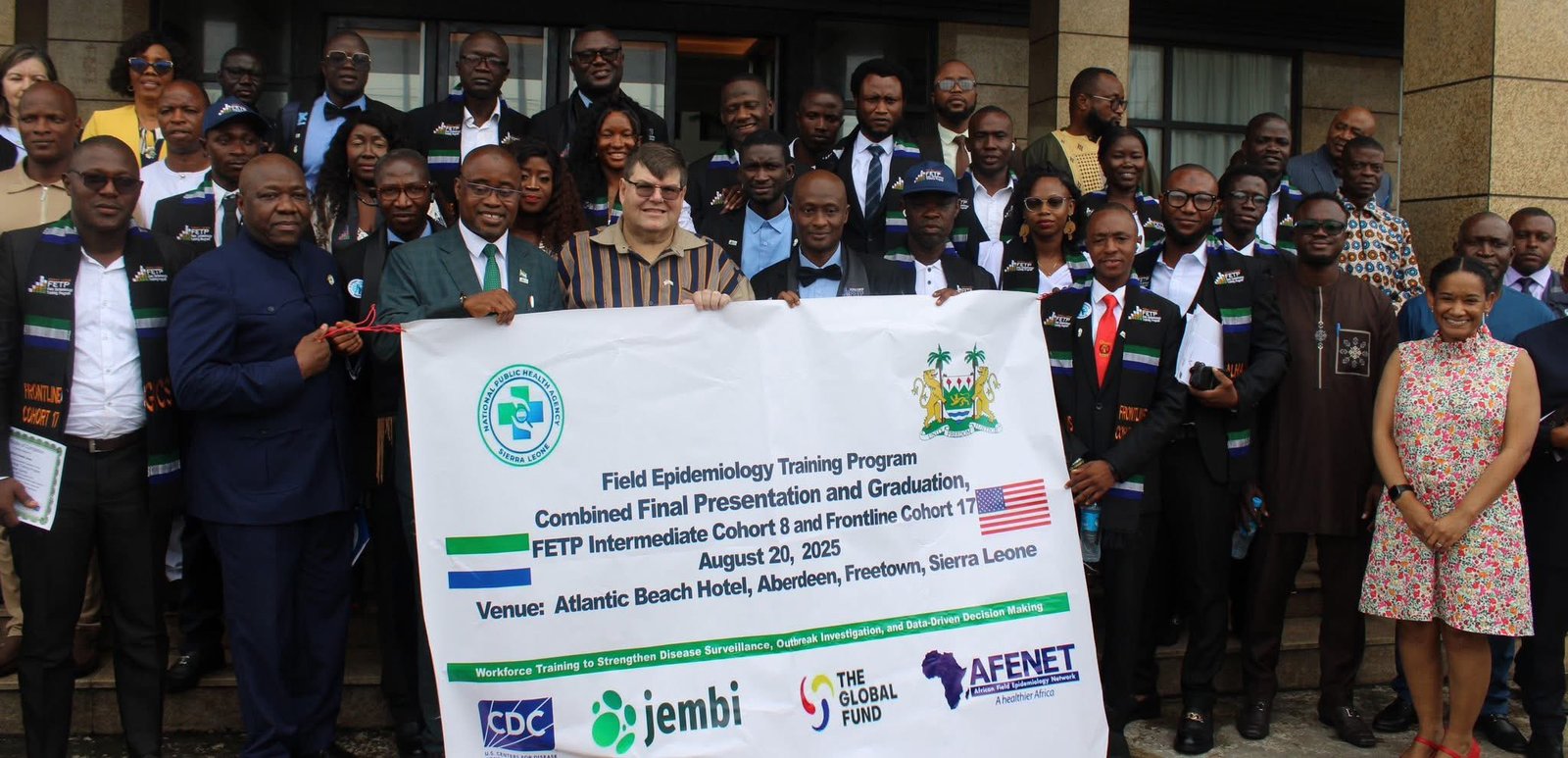
A new crop of “disease detectives” has joined Sierra Leone’s ranks of frontline health responders, graduating from the U.S.-funded Field Epidemiology Training Program (FETP) as part of a long-running collaboration between the Centres for Disease Control and Prevention (CDC) and the FETP.
The ceremony capped a combined final presentation for the FETP Intermediate Cohort 8 and Frontline Cohort 17, reinforcing Sierra Leone’s pivot toward a more proactive and data-driven approach to outbreak detection and response.
The graduates, enter a system where real-time surveillance, rapid lab confirmation, and field investigations are the norm. By equipping health professionals with advanced epidemiology skills, the program aims to shorten outbreak timelines, reduce case fatality rates, and blunt the economic shocks that epidemics can unleash on a developing economy that already faces health system constraints.
From Ebola to COVID-19 to Mpox, the graduates will operate at the intersection of public health and policy, translating granular data into actionable responses. The program’s operational blueprint centers on building local capacity for field investigations, outbreak analytics, and evidence-based decision making.
Graduates are trained to identify clusters, implement targeted containment measures, and coordinate with national health authorities to deploy resources efficiently.
In an era of heightened cross-border mobility, this capability matters far beyond Sierra Leone’s borders, helping to prevent spillovers that could ripple through regional supply chains, markets, and investment climates.
A healthier population reduces systemic healthcare costs, preserves labor productivity, and enhances investor confidence in a long-term growth trajectory.
The FETP’s long-standing track record combined with the CDC’s technical leadership, also serves as a reputational signal to international partners and donors about Sierra Leone’s commitment to governance, transparency, and competency in public health management.
Officials say the graduates’ impact will extend beyond epidemiology into health system strengthening: improved routine immunization planning, more robust disease surveillance networks, and strengthened health communication channels that can avert rumours and misinformation during crises.
The program’s emphasis on data-driven responses aligns with national development plans and the broader UN Sustainable Development Goals, reinforcing Sierra Leone’s status as a regional model for resilience and preparedness.
The FETP initiative is a reminder that targeted capacity-building programs can yield outsized returns. By investing in human capital today, Sierra Leone is better positioned to mitigate the economic drag of future outbreaks, protect trade and travel corridors, and maintain a stable macroeconomic path even as the world contends with evolving health threats.
The end game is straightforward: a safer Sierra Leone, a safer world, and a clearer return on investment for health spending that prioritizes preparedness as a core growth driver.