Utilities, Rent Push Inflation to New Highs
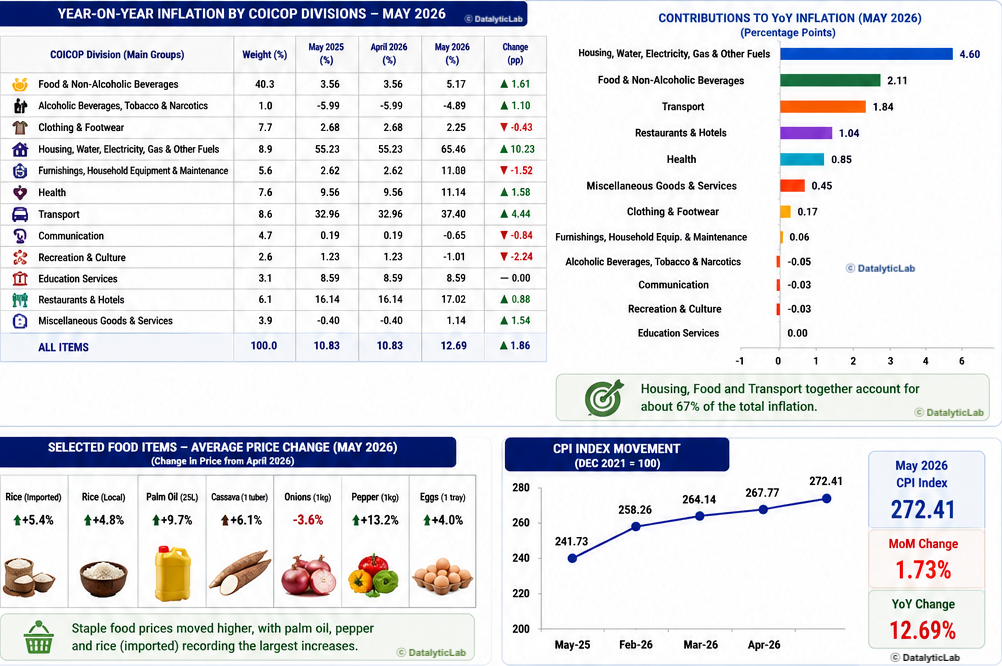
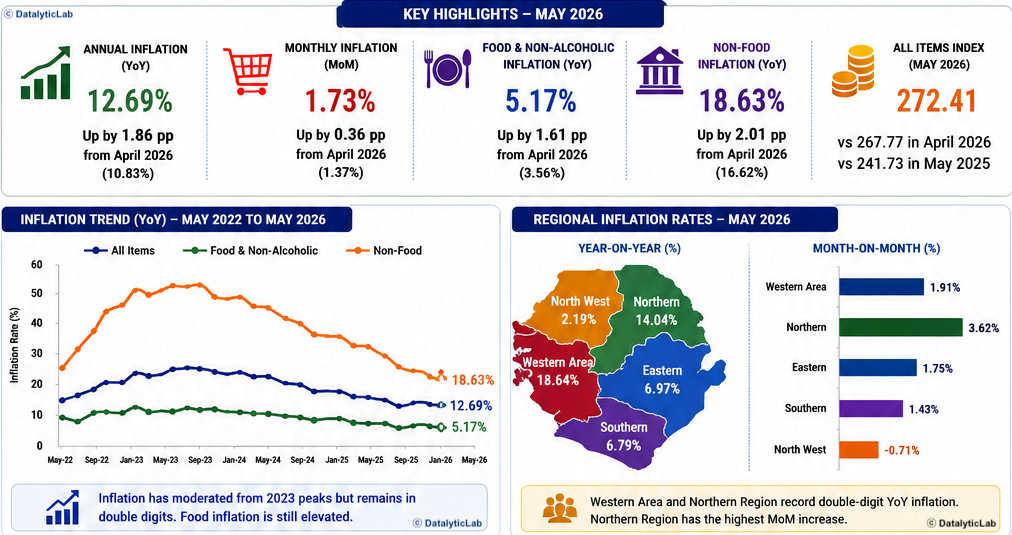
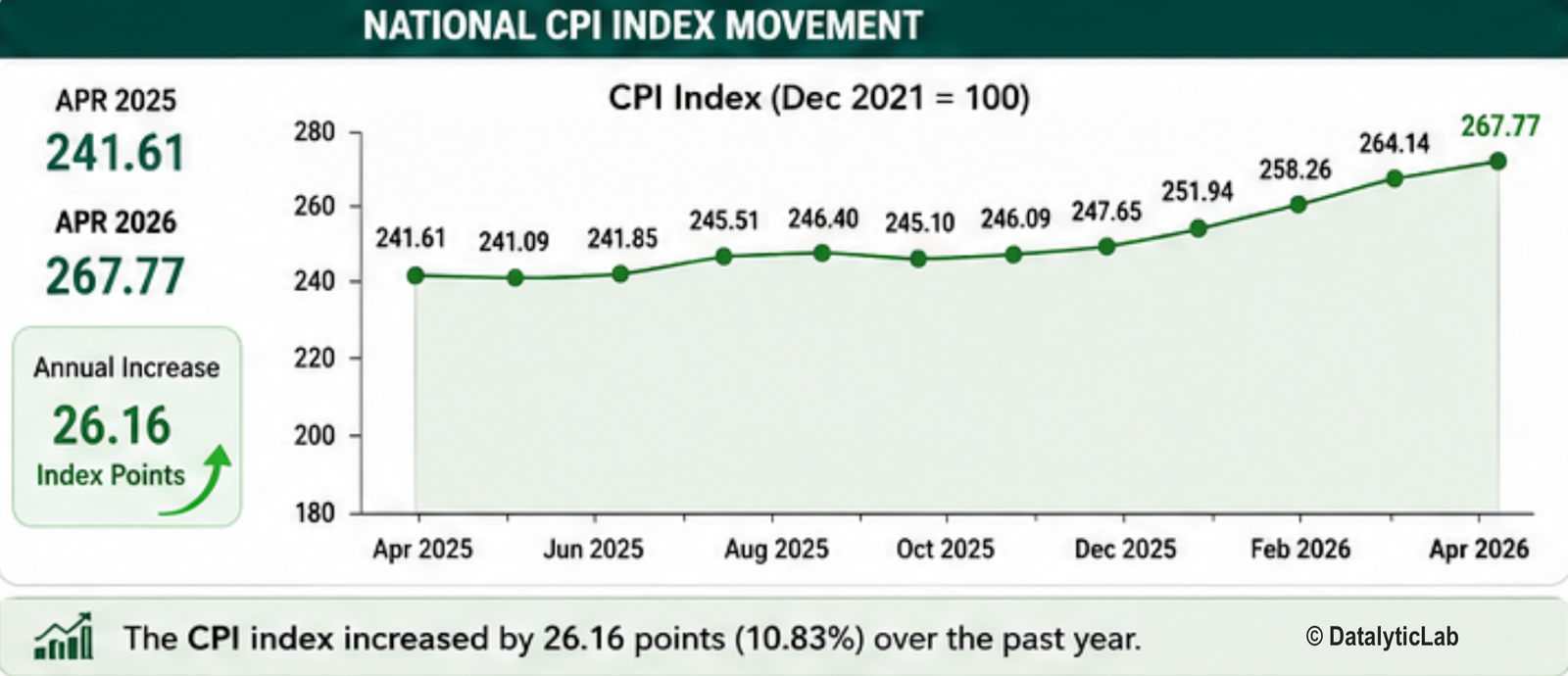
Sierra Leonean households continue to grapple with mounting cost of living pressures as new data from Statistics Sierra Leone shows the national Consumer Price Index (CPI) rising to 272.41 in May 2026, up from 267.77 in April and 241.73 in May 2025. The figures indicate that although inflation has eased from the extreme spikes of recent years, prices for essential goods and services—especially food, housing, transport, and restaurants—continue to climb, eroding household purchasing power.
Food, the largest expenditure for most families, remains a major driver of inflation. The Food and Non Alcoholic Beverages Index increased to 278.33 in May, up from 275.19 in April, and significantly higher than 264.65 recorded in May 2025. This represents a 5.2 percent year on year rise, underscoring that households are paying more for the same basket of staple goods compared to a year ago. Housing related expenses, however, have emerged as the most aggressive inflation driver. The Housing, Water, Electricity, Gas and Other Fuels Index surged from 199.94 in May 2025 to 330.82 in May 2026—a jump of more than 65 percent in twelve months. The index also rose from 311.51 in April 2026, adding 19.31 points in just one month. This steep escalation reflects persistent increases in utility tariffs, energy costs, and housing services, significantly squeezing disposable incomes.
The hospitality sector is also feeling the strain. The Restaurants and Hotels Index climbed from 327.25 in May 2025 to 382.96 in May 2026, as businesses pass higher operating costs—including food, transport, and energy—onto consumers. Eating out and accommodation have become increasingly expensive for urban households.
Compared with January 2026, when the housing index stood at 253.85, the rise to 330.82 represents a more than 30 percent increase in five months, cementing housing related costs as the dominant contributor to Sierra Leone’s inflation profile. For lower income families, these expenses are particularly burdensome because they cannot easily be substituted or delayed. The data suggests that inflation is no longer driven solely by imported food prices. Domestic utility and infrastructure related costs are now playing a larger role, complicating policy responses. Unlike food price shocks, housing inflation tends to be slower to reverse, meaning relief may take longer to reach households. Despite the persistent pressures, monthly inflation increases have moderated compared to the surge experienced in 2023 and early 2024. Analysts note that stabilizing domestic food production, prudent monetary policy, and improved supply chains will be essential to easing the strain on household living standards in the months ahead.